

Store pearl jewelry flat, separate from harder pieces, and protected by a soft pouch or fabric-lined compartment. The goal is to prevent scratches, reduce pressure on thread and settings, and keep cosmetics or moisture from being trapped against the surface.
Pearls are softer than many gemstones and metal edges. Good storage is simple, but it should account for the whole piece—pearls, clasps, posts, thread, adhesive and any additional stones.
Why pearl storage matters
At about 2.5 on the Mohs hardness scale, pearl can be scratched or abraded by harder jewelry. A loose diamond earring, metal chain or exposed post can mark a pearl when pieces move together in a box.
Strands also need support. Hanging them for long periods places continuous tension on thread, while tight bends can distort the way a necklace or bracelet lies.
Choose a soft, separate space
Place each pearl piece in its own soft pouch or a separate fabric-lined compartment. The lining should be clean and free from grit.
- Keep pearls away from diamonds, sapphires and other hard gemstones.
- Prevent clasps, earring posts and chain ends from rubbing against pearl surfaces.
- Do not pile several pearl pieces together.
- Avoid containers with rough seams, hard zippers or exposed metal interiors.
A soft pouch protects the surface, but do not compress the jewelry into a pouch that is too small.
Store pearl necklaces and bracelets flat
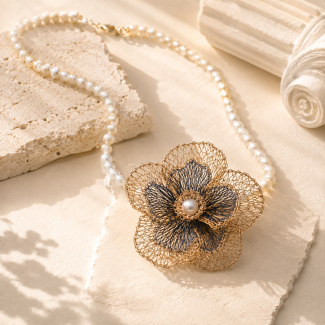
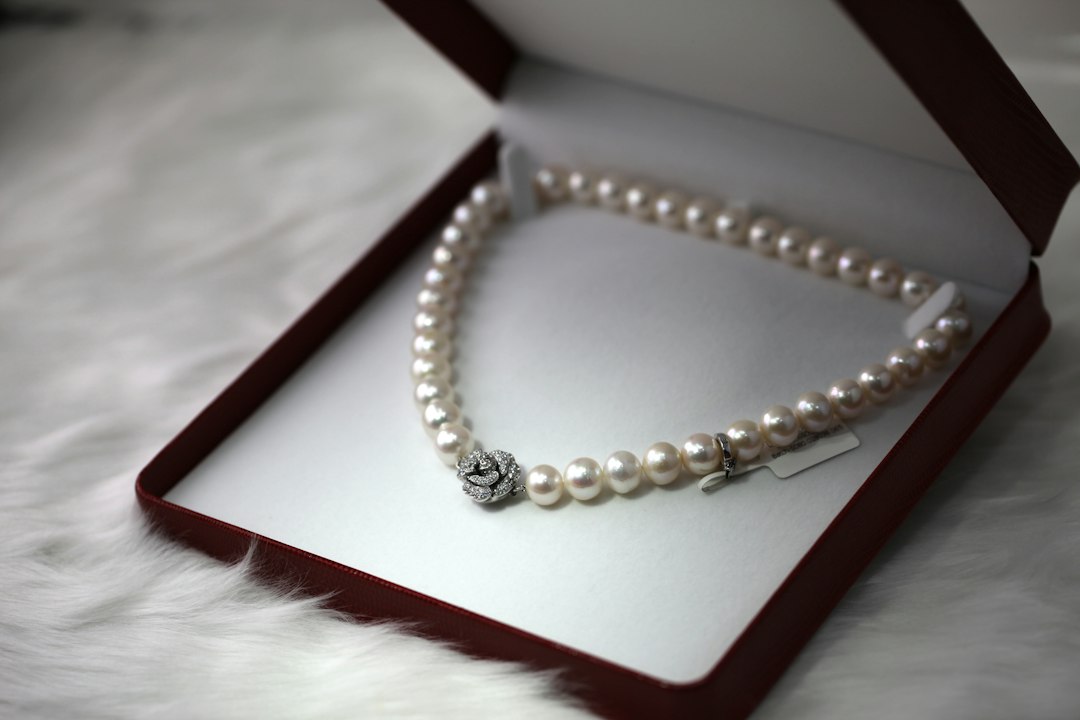
Lay a strand flat or in a broad, relaxed curve. Fasten the clasp so it is less likely to move across the pearls, but do not pull the strand taut.
Avoid long-term hanging. Gravity can stretch thread, particularly in a heavy necklace. If a storage compartment is short, use a gentle curve rather than folding the strand sharply.
Before storage, check for fuzziness, gaps, loose knots or a clasp that no longer closes securely. A weakened strand should be inspected before it is worn again.
Store pearl earrings carefully
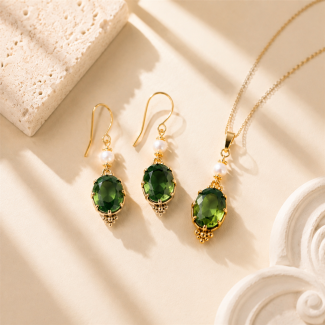
Keep each earring from pressing into the other. Posts and backs can scratch pearls, so use separate small compartments or a soft earring holder that keeps metal parts controlled.
For pearl studs, hold the metal finding—not the pearl—when removing the back. If the pearl moves on its post, stop wearing it and ask a jeweler to inspect the adhesive or setting.
Store pearl rings and pendants without pressure
A pearl ring should sit in a compartment where adjacent jewelry cannot strike the pearl. Do not place heavy pieces on top of it.
For pendants, position the chain so it does not wrap tightly around or rub across the pearl. Fastening the clasp can reduce tangling, and a small separate pouch can keep the chain from contacting the pearl during movement.
Make sure pearls are clean and dry first
After wear, wipe pearls with a clean, very soft cloth to remove perspiration, skin oils and traces of cosmetics. If you used a damp cloth, let the entire piece dry completely before closing it in a pouch or case.
Moisture can remain in thread, knots, drill holes and enclosed settings after the pearl surface feels dry. Lay strung jewelry flat while it dries.
For the full method, see how to clean pearls safely.
Where should the jewelry box be kept?
Choose a stable indoor location away from direct sunlight, radiators and other strong heat sources. Avoid rapid temperature changes and areas where cosmetics, hairspray or household cleaners may spill.
Do not store pearl jewelry in a bathroom. Repeated humidity changes, steam and proximity to toiletries make it a poor environment for thread, adhesives and metal components.
A home safe may offer security, but protect the piece inside it with a soft compartment and do not store it while damp. Avoid placing heavy document boxes or jewelry cases on top.
Should pearls be stored in plastic?
A plain plastic bag is not the best primary storage because seams, closures and neighbouring items may press against the pearls, and residual moisture can be trapped if the piece was not fully dry.
For short-term organisation, a clean, smooth pouch can work if the jewelry is dry and not compressed. A soft fabric pouch or lined compartment is usually the more forgiving choice.
How to store pearls while travelling
- Wipe the jewelry before packing.
- Fasten clasps and separate earrings from strands.
- Place each piece in a soft pouch or fitted compartment.
- Lay necklaces in a broad curve without sharp bends.
- Keep heavy objects from pressing on the case.
- Carry valuable or sentimental jewelry with you rather than in checked luggage.
After travel, inspect clasps, posts and settings before wear. Movement in a bag can reveal a weak component even when the pearls themselves look unchanged.
Common storage mistakes
- Leaving pearls mixed with harder jewelry
- Hanging a heavy strand for months
- Storing jewelry before it is fully dry
- Letting chains or clasps rub across the pearl surface
- Keeping pearls beside perfume, cosmetics or cleaning products
- Compressing a baroque pearl or raised ring under heavier pieces
A simple pearl storage checklist
- Clean: wipe after wear.
- Dry: allow all thread and settings to dry completely.
- Separate: keep away from harder jewelry and exposed metal edges.
- Soft: use a clean pouch or lined compartment.
- Flat: support necklaces and bracelets without tight bends.
- Stable: store away from heat, steam and chemical products.
Storage is one part of a complete routine. For wearing, cleaning and inspection habits, read how to care for pearl jewelry. If the piece has been soaked, follow our guidance on what to do when pearls get wet before putting it away.
For more everyday cleaning and protection advice, browse our jewelry care guidance.
Frequently asked questions
Can I hang a pearl necklace?
Short-term display may be harmless, but flat storage is better for the long term because it avoids continuous tension on the thread.
Can pearls share a jewelry box with other pieces?
Yes, if they have their own soft, separated compartment. Do not let harder stones, chains, clasps or posts contact the pearl surfaces.
Should pearls be stored in a safe?
They can be, provided the piece is dry, softly protected and not compressed. Keep it in a separate pouch or compartment inside the safe.
How should I store baroque pearls?
Use the same soft, separate storage, with extra care not to place pressure on high ridges, thin edges or sculptural settings.